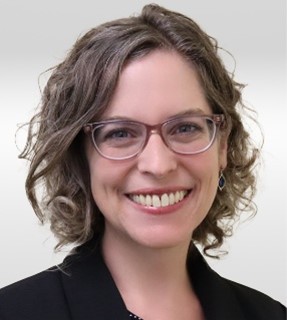
Building on last month’s DAFinitively Speaking post defining the common types of charitable funds managed by community foundations, I was fortunate to connect with Mary Hartstein, Director of Donor Engagement and Impact at the Rochester Area Community Foundation, (RACF) to discuss her organization’s process for donor engagement, depending on the fund type.
Background on RACF
First, a little history. Established in 1972 by a volunteer board, the Rochester Area Community Foundation established its first DAF in 1976 and the first Field of Interest Fund in 1984. RACF now has more than 500 funds!
The Foundation’s mission is: “in partnership with generous philanthropists and community partners, [RACF] works to improve the quality of life for people who live and work in the eight-county region [of New York State] through its leadership and strategic grantmaking.” Since its founding, RACF has distributed more than $765 million. Aligned under the goals of equity and vitality, the foundation’s interest areas include aging, arts & culture, education, the environment, historic preservation and racial equity.
One of the features of the Rochester Area Community Foundation is the wide variety of giving vehicles for donors. Some of the options include scholarship funds, field of interest funds for specific causes, Giving Circles (including BIPOC, Latino, LGBT+ and Women’s funds), DAFs, unrestricted community impact funds, whose priorities can change over time and even a charitable checking account(SM) fund that offers a lower opening balance and the opportunity to contribute at any time.
About Mary Hartstein
While Ms. Hartstein joined the organization in 2011 as an administrator, it was not her first interaction with RACF. “Prior to working for the Community Foundation, I worked for a small grassroots nonprofit leadership development organization in Rochester for six years and applied for and received grants from the Community Foundation in that role. From my experience…I knew I wanted to continue to be part of the nonprofit sector in Rochester but didn’t have a particular focus. That made the Community Foundation a perfect fit because it touches on so many aspects of the community.”
Ms. Hartstein joined RACF’s Development team in 2017. “When I made that change, I thought it was for the short term, but ended up loving the work and have stayed and grown in this position. I started as a Philanthropic Services Officer, providing direct support for our DAFs and also managed our Agency Fund Program. I then began to oversee our Giving Circle program, our annual fund program, and now our co-investment strategies.”
Does her prior work inform her donor engagement work now?
“Absolutely, my work on the other side of the house, in our Programs department, helped me gain a foundational knowledge of our grantmaking that is immeasurably helpful when explaining our processes and expertise to our donors/fundholders. A huge part of my role is inviting our DAF holders to join our Leadership grantmaking in our region to increase our collective impact.”
Donor Engagement Strategies
To get started, I asked Ms. Hartstein about how donor engagement works for RACF’s Giving Circles: “Our Giving Circles are a uniquely powerful and community-centered approach to philanthropy. They create an accessible and equitable entry point for donors of all giving levels, grounded in the idea that collective action can achieve more than any one individual alone. They are also among our most diverse and community-connected grantmaking vehicles, strengthening our relationships and understanding across the region.”
She continued: “at the same time, Giving Circles are designed to be highly participatory, with a strong emphasis on community engagement and shared decision-making. This depth of engagement requires a meaningful investment of staff time to support both the grantmaking process and the community-building experiences that make the model so impactful. As a result, while their grantmaking capacity is intentionally collective in nature, it differs from other vehicles.”
Alternatively, she felt that working with individual DAF donors requires a different approach from the RACF team. “Donor-advised fund engagement tends to be more individualized and relationship-driven, often requiring a different level of staff support.
Together, these approaches reflect our broader commitment to meeting donors where they are, while advancing equity, accessibility, and impact across our work.”
Donor Acknowledgements
Many of us who aren’t in Ms. Hartstein’s shoes have questions regarding donor acknowledgments and privacy.
So, I asked her how she manages expectations from nonprofit recipients who might want to find a way to say thank you outside of the standard channels.
While this does vary depending on the sponsoring organization, in the case of RACF, “when a donor establishes a DAF, they select the level of anonymity they wish to maintain – to share their name and address with grantees, to simple share the fund name, or to remain fully anonymous,” she said. “With every DAF grant, we send a transmittal letter to the grantee that includes the allowable information. We encourage the grantee to reach out directly to donor if they shared their information.”
RACF typically considers stewardship between a grantee and a DAF holder the responsibility of the organization that received a grant. Her experience is that most DAF holders are uninterested in a form thank you letter, especially since they don’t need it for tax purposes (the tax event is when the donation is made into the DAF, not when a grant is made).
If a fundraiser at a grantee organization does reach out to the RACF team, how do they handle it?
For DAFs, “if we have authorization to share, we will absolutely do so. Otherwise, the information is private. We do offer to pass along personalized thank you letters, but if a donor wishes to be anonymous, they are not expecting the organization to reach out in that way, so it is typically not necessary and won’t necessarily influence future giving.”
“Giving Circles are definitely different, and we have moved away from publishing donor lists in general, [as well as] for the Giving Circles. Most Giving Circle members do not want their names to be publicized. And stewardship of an individual donor within the Giving Circle won’t do too much to advance the overall giving circle relationship. The grant applications are decided on through committee and membership vote, and are more structured and less relational than potentially a DAF-grantee relationship.”
Donor Engagement from Meh to Momentum: Co-Investment & DAFs
Her recent presentation at AdNet (The Advancement Network)’s March 2026 conference, “Taking Donor Partnerships from Meh to Momentum,” focused on co-investment. Ms. Hartstein discussed how RACF changed their engagement strategies by focusing on co-investment between individual DAFs and RACF’s overall priorities. Co-investment “connects donor passion with leadership grantmaking to expand the dollars addressing our region’s most pressing needs.”
Donors that participated in co-investment were presented with options that met their priorities and interests, as well as RACF’s, while feeling confident that the designated recipients had the infrastructure to successfully use their funds. In several examples, second-generation donors felt more connected to their family members who began their philanthropic journey. All told, these efforts raised more than $1 million in 2025 for 191 grants by 84 donors. Perhaps even more importantly, RACF’s approach shifted from “donor-centric to donor-sensitive,” which built “deeper alignment, not just bigger gifts.”
Summary
The key takeaway from our conversation is that collaboration and situational context are crucial. As most researchers and fundraisers know, we are team players. We are helpers. Our flexibility to work with different constituencies and audiences is what makes our work so important to meeting our organization’s goals.
Special thanks to Mary Hartstein from the Rochester Area Community Foundation (RACF) for her generous participation!
Would you or someone at your organization like to talk to us at DAFinitively Speaking? Let us know! hello@dafinitive.com
